
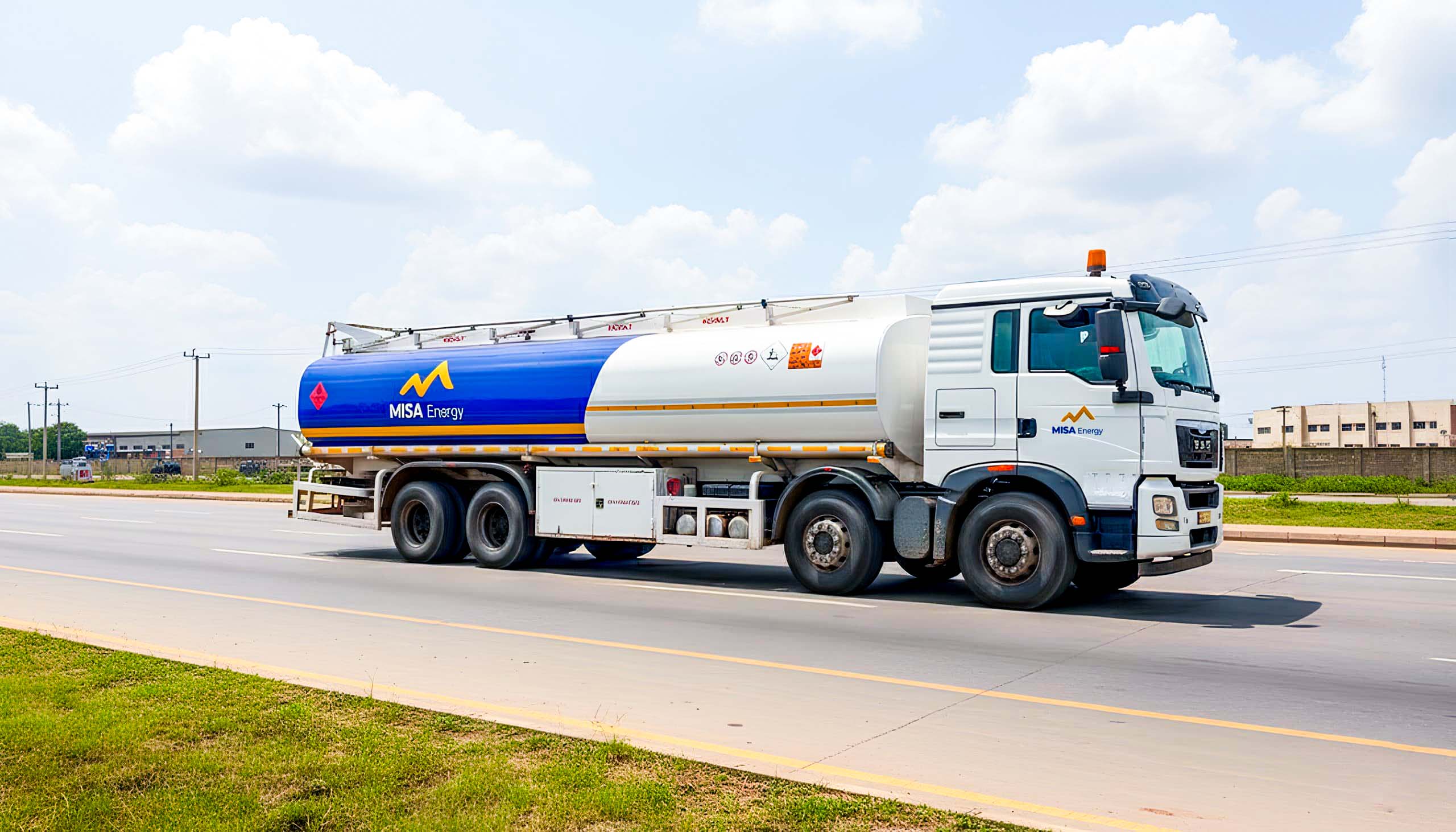
Fuel plays a critical role in powering Ghana’s economy—from transportation and construction to agriculture and industry. Behind every smooth journey and operational business is a complex and well-coordinated system managed by Oil Marketing Companies (OMCs) like MISA Energy.
In this article, we explore how fuel is sourced, transported, and delivered across Ghana to ensure consistent availability nationwide.
1. Fuel Sourcing and Importation
Oil Marketing Companies begin the supply chain by sourcing petroleum products either locally or through international importation.
Fuel is typically imported in large volumes through coastal terminals such as Tema, where it is received, tested, and stored. Strict quality control measures are applied to ensure the fuel meets industry standards before distribution.
2. Storage and Depot Management
Once imported, fuel is stored in bulk at depots and storage facilities. These depots act as central hubs for distribution across the country.
OMCs work closely with bulk distribution companies (BDCs) to manage inventory levels, maintain safety standards, and ensure there is no disruption in supply.
3. Transportation Across the Country
From the depots, fuel is transported via tanker trucks to various regions across Ghana. This stage is one of the most critical in the supply chain.
Logistics teams carefully plan delivery routes to ensure:
- Timely delivery to stations
- Safety compliance during transportation
- Efficient distribution to both urban and remote areas
Reliable transportation ensures that fuel reaches even the most distant communities.
ALSO READ: Fuel Quality in Ghana: Why It Matters More Than You Think
4. Retail Distribution at Service Stations
Fuel is delivered to service stations, where it becomes accessible to consumers.
Modern service stations, like those operated by MISA Energy, are designed to provide:
- Clean and safe fueling environments
- High-quality fuel products
- Convenient customer experiences
Station attendants are trained to deliver efficient service while maintaining safety standards.
5. Quality Control and Safety Assurance
At every stage, from importation to the pump, quality control is a top priority.
OMCs implement:
- Regular fuel testing
- Equipment maintenance
- Strict safety protocols
This ensures customers receive fuel that is reliable, efficient, and safe for their vehicles and machinery.
6. Supporting Ghana’s Economic Growth
Oil Marketing Companies play a vital role in national development by:
- Powering transportation networks
- Supporting industries and businesses
- Enabling agricultural and construction activities
Without a reliable fuel supply chain, many sectors of the economy would struggle to operate efficiently.
Conclusion
The journey of fuel from import terminals to your vehicle is a highly coordinated process that requires expertise, infrastructure, and precision. Companies like MISA Energy are committed to ensuring that fuel is delivered safely, efficiently, and consistently across Ghana.
As the industry continues to evolve, innovation and customer-focused service will remain at the heart of fuel distribution—keeping Ghana moving every day.
Looking for reliable fuel you can trust?
Visit your nearest MISA Energy station today and experience quality service powered by excellence.